

Allan Klepfisz – The Man Who Won’t Stop Fighting for the Artist
-

- May 15, 2026
From ad-supported downloads in 2008 to blockchain-powered super-apps today, Allan Klepfisz has spent his entire career asking the same question — and refusing to stop until the industry gives artists the right answer.
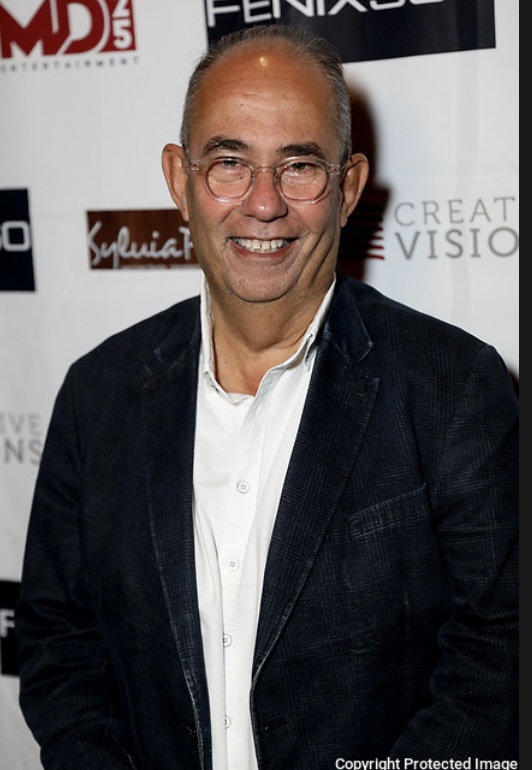
There is a version of this story that ends in 2008. That is the year Allan Klepfisz walked onto the stage at MIDEM — the music industry’s most prestigious global conference, held each January in Cannes — and announced QTRAX, a free, legal, ad-supported music download service that he said would sign the music libraries of the four major labels and redirect the millions of people pirating music online into a legitimate, compensated ecosystem. The announcement made headlines around the world. The stock price of QTRAX’s parent company hit a 52-week high.
Then the deals fell apart. The labels walked back their agreements. The press piled on. By most measures, the moment that was supposed to define Klepfisz as a visionary instead defined him as a cautionary tale.
He didn’t stop.
QTRAX regrouped, rebuilt, and by 2011 was operating in 68 countries with licensing deals across three of the four major labels. It ran until 2019. And while it eventually closed, Klepfisz was already years into building what would become his most fully realized idea: FENIX360, the platform he calls the future of social media — and the music industry’s best chance at finally, structurally, making things right for the people who create the music.
The Question That Wouldn’t Go Away
The throughline of Klepfisz’s career is not technology. It is not entrepreneurship, not venture capital, not disruption for its own sake. The throughline is a single, stubborn question: why don’t the people who make the music get paid fairly for it?
It is, on its face, a simple question. In practice, it has proven almost impossibly difficult to answer — not because the answer is unknown, but because the architecture of the music industry has been built, layer by layer, to ensure that the answer stays the same. Streaming platforms pay fractions of a cent per play. Algorithms decide which artists fans ever discover. Labels take the lion’s share of everything. Social media amplifies whoever already has the most followers. And the independent artist — the one creating original work without a major label’s machinery behind them — is left fighting for scraps.

Klepfisz has described his approach to every idea as “simple problem solving.” But the problem he has chosen to solve is one that has defeated or disinterested most of the people with the resources to actually tackle it. That he keeps coming back to it — with new tools, new partners, and new protected intellectual property — is either stubbornness or vision. Given where FENIX360 stands today, it is looking increasingly like the latter.
What FENIX360 Actually Does
FENIX360 is, at its most practical level, a platform that lets any artist build a fully customized, branded app in under 20 minutes — no coding, no design team, no label infrastructure required. That app becomes the artist’s complete digital universe: their music, videos, merchandise, concert tickets, livestreams, NFTs, and social media presence all in one place, all under their control.
The revenue model is where FENIX360 separates itself from everything that came before it. Artists keep 80 percent of advertising income generated through their app and 95 percent of everything earned through merchandise, tickets, NFTs, and livestreams. There are no hidden algorithms throttling their reach to fans. There are no upfront costs to join. And the entire platform is built on blockchain technology, creating a transparent, verifiable record of every transaction.
For context: Spotify pays most independent artists between $0.003 and $0.005 per stream. An artist would need roughly 250,000 streams to earn $1,000. On FENIX360, that same artist keeps 95 cents of every dollar their fans spend directly on their work. The math is not complicated. The will to build it, apparently, was.
The Team He Built
Klepfisz did not build FENIX360 alone. His co-founder and president is Lance Ford, the former founding publisher of Maxim magazine, who has described FENIX360 as “a great way to present yourself to fans and friends and excites them continuously with a media property that you control.” Ford brings the kind of mainstream media instinct that complements Klepfisz’s tech-and-infrastructure orientation — a pairing that mirrors the platform’s dual identity as both a financial tool and a creative showcase.
The advisory bench runs deep. Sandy Monteiro, who serves as CEO Asia for FENIX360, spent years as President for Southeast Asia and Head of New Business for Asia Pacific at Universal Music Group International — making him one of the few people on the platform’s team who has operated at the highest levels of the very system FENIX360 is designed to challenge. Jason Berman brings experience from the International Federation of the Phonographic Industry. Larry Gan comes from Accenture. John Velasco, CEO of FENIX360 Visual Media, has decades of experience at United Artist Music UK and CBS, with a roster that included Jimmy Webb, Black Sabbath, and Tina Turner.
These are not outside hires brought in to add credibility to a startup’s pitch deck. They are industry veterans who looked at what Klepfisz was building and decided it was worth their names and their time.
From Southeast Asia to New York City
FENIX360 launched its global rollout in Indonesia, Malaysia, and the Philippines, rapidly building a community of over 7,000 artist ambassadors before expanding to Australia and the United States. The platform is available on iOS and Android and via a web interface that auto-generates a website equivalent of each artist’s custom app — meaning that the moment an artist builds their FENIX360 app, they also have a professional web presence.
In New York, the platform’s Fenix Rising showcase series has put real, working independent artists on real stages — most recently at The Bitter End on Bleecker Street in Greenwich Village, a room that has hosted everyone from Bob Dylan to Lady Gaga in its six-decade history. It is exactly the kind of venue where the artists FENIX360 was built for have always found their footing: talented, driven, and operating entirely outside the machinery that Klepfisz has spent his career trying to dismantle.
In late 2023, FENIX360 announced a $610 million deal with DUET Acquisition, with plans to list on NASDAQ — a milestone that signals the platform’s transition from visionary concept to publicly accountable company. Klepfisz has said he is “very pleased” that the planned listing will allow FENIX360 to “accelerate its global ambitions.” For the artists already on the platform, that acceleration cannot come fast enough.
Why This Time Is Different
It would be easy — and not entirely unfair — to greet FENIX360 with skepticism. The music industry is littered with platforms that promised to transform the artist’s relationship with their audience and their income. Most did not last. Most did not try hard enough. And Klepfisz himself has been through a version of this before.
But FENIX360 is different in a few important ways. It holds granted patents and patent-pending claims on its core models — structural protections that most platforms never bothered to pursue. It is built on blockchain, not on the goodwill of label licensing agreements that can be revoked. Its revenue splits are not a promotional offer; they are the architecture. And perhaps most importantly, it is run by someone who has already been through the fire, who knows exactly where the bodies are buried in the traditional model, and who has spent years — not months — designing something that cannot be dismantled the same way.
“We’ll be very happy if others defensively duplicate our obsession with the welfare of artists,” Klepfisz has said. “We are adding powerful tools and untapped sources to expand the possibilities of artists’ revenue.”
It is the kind of statement that only makes sense coming from someone who has been at this long enough to know that the fight is the point — and that the artist, at the end of it, is worth fighting for.
For more information visit fenix360.com